
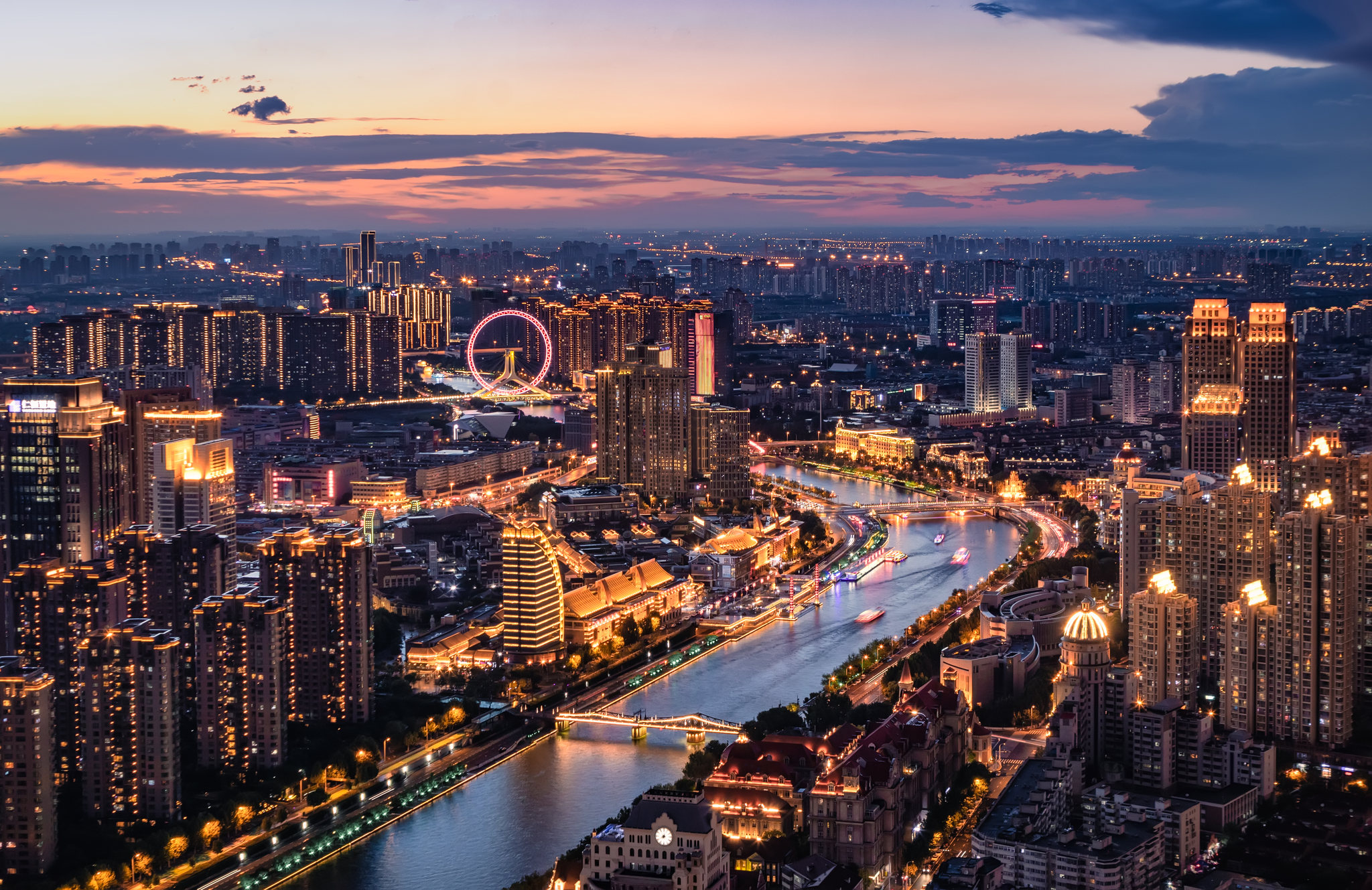
Tianjin is located on an alluvial plain that was formed after a marine regression. As early as the Paleolithic period, over 100,000 years ago, humans lived and reproduced in today's Jizhou District.
Over 4,000 years ago, the central urban area of Tianjin emerged from the sea. Later, the legendary emperor Yu the Great dug the Yuhe River, diverting water from the Yellow River into the sea through what is Tianjin today. Since then, the Yellow River has flowed into the sea through this area three times. Coupled with the joint action of "nine downstream rivers", an alluvial plain was formed and the coastline was gradually shifted eastward.
During the Spring and Autumn Period (770 BC - 475 BC), the coastline of Tianjin was located roughly to the east of today's Zhangguizhuang, Jugezhuang, and Shajingzi. By the Warring States Period (475 BC-221 BC), many densely populated villages had appeared in the plain area of Tianjin. Archaeological findings show that in the outskirts of Tianjin alone, remains of ancient villages have been discovered in as many as 50 places.